Back to Events
Unlocking Scale: How VCs Can Leverage Corporate and Accelerator Networks
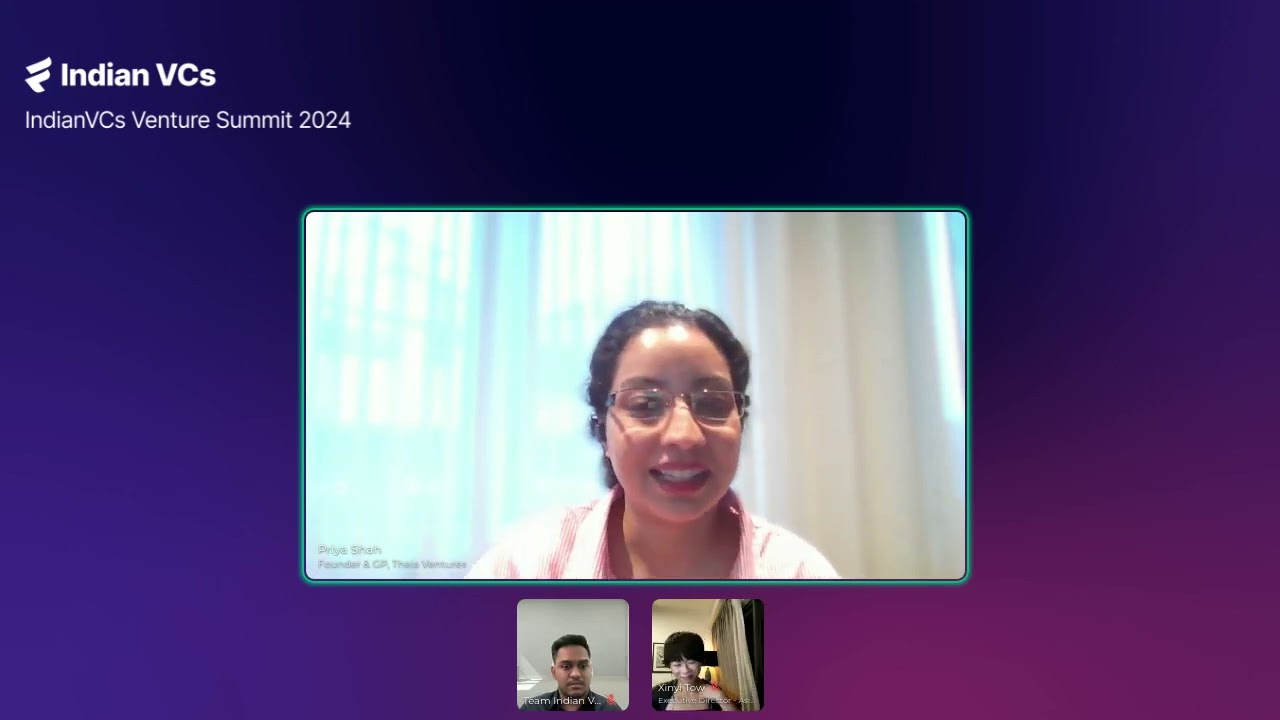
Accelerators and corporate partnerships get pitched to founders constantly. Two investors who run them draw the line between real de-risking and a logo on a slide.
What this session covered
Accelerators and corporate partnerships get pitched to founders constantly, but very few of them change a company's odds. Priya Shah, whose climate fund Thea Ventures sits inside the 85 founder Sustainability Mafia coalition, and Xinyi Tow, who runs Asia investment for the global deep tech network Hello Tomorrow, spent this session drawing the line between partnerships that genuinely de-risk a technology and those that simply buy a logo for a slide.
Top talking points
Talk to startups more than you think you need to. Xinyi's diagnosis of technically brilliant founders is that they fall in love with their own technology before validating that anyone needs it. Her programmes build in a mandatory customer interview cadence to force that discipline early, while it is still cheap to fix.
The pair, not the person. Priya's bar for a fundable climate team is one operator or GTM lead matched with one scientist or IP lead. The scientist alone burns capex on the wrong problem. The operator alone has nothing durable to sell.
Sustainability Mafia runs five verticals. A university spin out programme with BITS Pilani, IIT Madras and Ashoka, corporate matchmaking with firms including Cisco and Flipkart, an investor vertical, a talent vertical, and city chapters. It is pipeline infrastructure rather than a networking mixer.
The pipeline reaches outside India. Harvard i-Lab and MIT's Climate Energy Prize both feed this ecosystem, which gives Indian climate founders real touchpoints into US university deep tech pipelines.
The conflict of interest inside many accelerators. Xinyi's sharpest point was that plenty of accelerators structure first invest rights that only trigger after other investors have already validated the company. That is a free option riding on somebody else's diligence.
Impact founders should not pay a compliance tax. Reporting and compliance demands on climate and impact startups routinely exceed what a plain software company faces at the same stage. Xinyi calls this an impact premium that good companies absorb for no good reason.
India's manufacturing base is a genuine edge. Priya flagged labour and supply chain costs as a structural advantage for climate hardware teams building in India, not a consolation prize.
Who was on this session
Priya Shah, Founder and General Partner, Thea Ventures. Board member, Sustainability Mafia.
Xinyi Tow, Director, Hello Tomorrow.
About the Venture Summit
This session was part of the IndianVCs Venture Summit, three days of conversations with more than twenty investors and allocators on LP fundraising, portfolio support, and the tools reshaping how funds operate. The full set of recordings lives on our YouTube channel.
The takeaway
The filter this session leaves you with is simple. Before backing an accelerator or corporate partnership for a portfolio company, ask who is actually taking risk before the round closes, not who turns up at demo day with a logo to add.